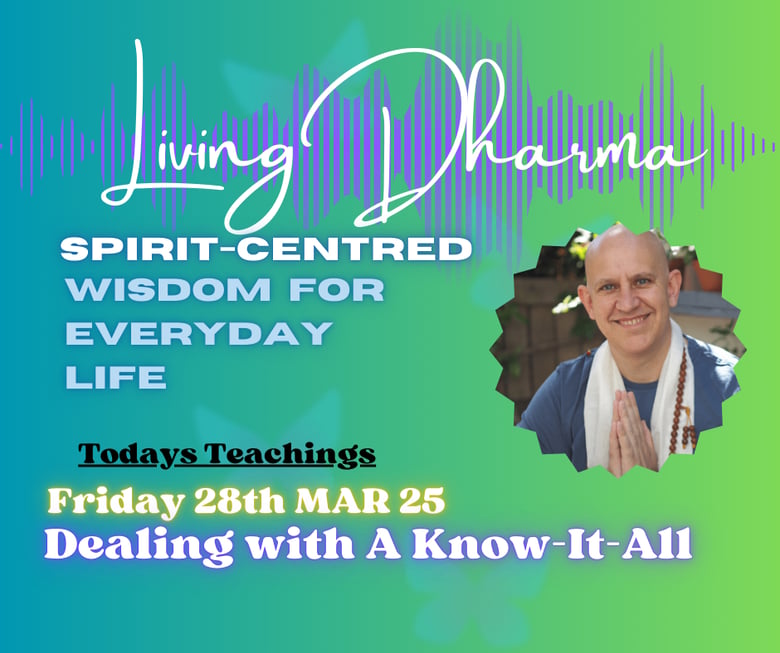
Navigating Relationships with Know-It-Alls • Embracing Compassion and Effective Communication
In the journey of life, where spirituality meets the practice of mindfulness, we often encounter personalities that challenge our peace and patience. As Mark, a meditation teacher and well-being coach, I've often found myself in conversations with individuals who seem to dominate discussions, unwilling to acknowledge different perspectives. These "know-it-all" personalities can be draining, but they also present us with an opportunity to practice compassion and enhance our communicative skills. Today, let's explore how to engage with know-it-alls in a way that maintains our inner peace and supports our personal growth.
Understanding the Know-It-All
Most of us have met someone who seems to have an answer for everything. This personality type often struggles to listen and seldom admits their mistakes. It's crucial to recognize that their behavior likely stems from a deep-seated need for attention and respect—needs they might feel are only met through displaying their knowledge.
From a perspective of mindfulness and ahimsa (non-harm), it is helpful to see beyond their facade of confidence and recognize the insecurity that drives their behavior. This recognition doesn't just help in managing our reactions but also fosters a sense of compassion towards them.
Strategies for Compassionate Engagement
Acknowledge Their Strengths: Start conversations by validating what they know. This can ease their need to prove themselves, opening up space for more balanced interactions.
Set Conversational Boundaries: Gently steer discussions to topics that encourage mutual exchange. This could involve shifting from fact-based dialogues to sharing experiences and feelings, which require personal reflection rather than factual knowledge.
Invite Them to Explore: Encourage a know-it-all to join you in exploring a new topic together. This can be framed as a journey you're both on, which might reduce their need to appear superior.
Express Needs Clearly: In the spirit of non-violent communication, express what you need from the conversation. Phrases like, "I value your insights, but I’d also love to share my perspective," can help create a dialogue that respects both parties' contributions.
Model Active Listening: By practicing active listening, we not only validate their thoughts but also demonstrate how they might reciprocate, fostering a more balanced exchange.
Creating Peaceful Personal Change
Incorporating these strategies into our interactions requires patience and practice. Each conversation with a know-it-all is an opportunity to practice mindfulness, reinforce our commitment to personal growth, and deepen our understanding of compassion. It also allows us to contribute positively to their life, perhaps teaching them the value of listening and openness without direct confrontation.
Conclusion
Dealing with know-it-all personalities can be challenging, but with mindfulness and strategic communication, these interactions can become valuable lessons in personal and spiritual growth. By approaching these individuals with compassion and clear communication, we foster an environment conducive to mutual learning and respect.
As we continue on our paths, let us choose kindness and understanding in our interactions, knowing that each person we meet has a role in our journey toward enlightenment and peace.